
Avatar: Fire and Ash – Movie Review
Table of Contents
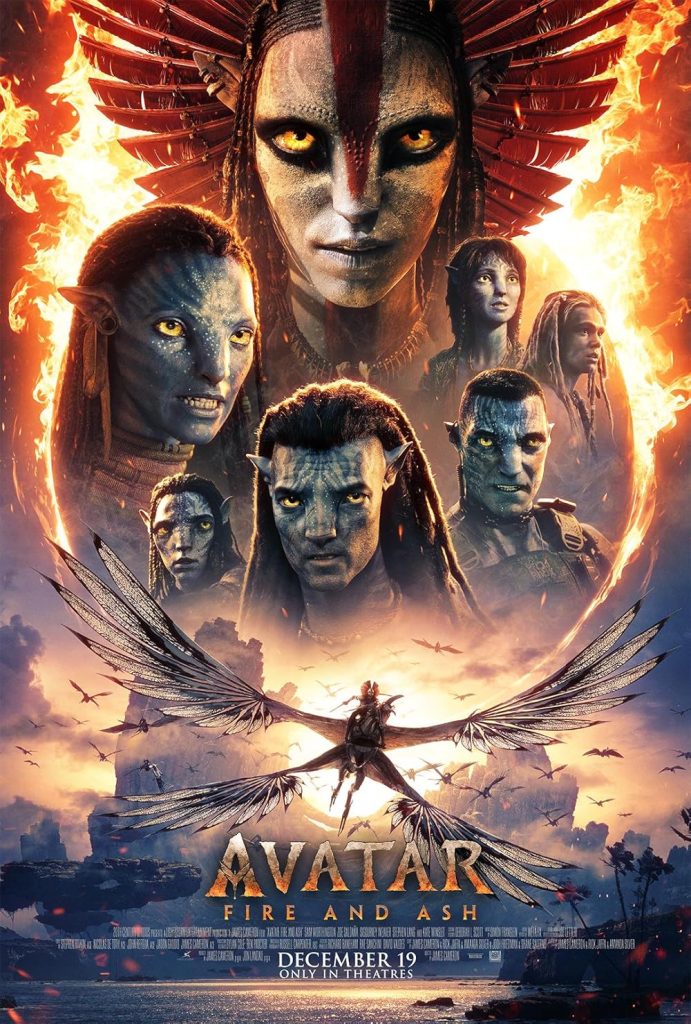
James Cameron returns to the world of Pandora with Avatar: Fire and Ash, a film that boldly reshapes the emotional and thematic direction of the Avatar saga. Darker, more intense, and thematically complex than its predecessors, Fire and Ash expands the mythology while delivering a cinematic experience designed for immersive, large-screen viewing. Till now, both movies in the series have portrayed the humans as greedy and evil, along with being the intelligent and emotionally complex beings that they were meant to be. The Na’vi people are the ones who were pristine, good, and virtuous. Here, James Cameron brings in darker shades to the Na’vi people.
My Avatar: Fire and Ash movie review examines the film’s storytelling, visuals, performances, themes, and why it is poised to dominate Global box offices – even if the opinion is divided, and search trends alike. It’s not a path-breaking movie franchise anymore; the breathtaking visuals do not get any better, but the story, having already lost a lot of novelty, loses even more steam and meanders within the realm of the ordinary, and does not engage the audience’s attention to the extent the first two installments of the franchise did.
A Bold Shift in Tone: Fire Replaces Water
Unlike Avatar (2009) and The Way of Water (2022), Fire and Ash takes a noticeably darker turn. The film introduces new Na’vi clans associated with volcanic regions, fire-based rituals, and moral ambiguity. The traditional good-versus-evil binary is replaced with a more nuanced exploration of power, survival, and cultural conflict. The Mangkwan clan is introduced in this version, led by the fiery Varang (Oona Chaplin) and her band of warriors. They have abandoned Eywa, the resident deity of the Na’vi’s, and have become outcasts.
They used to be forest dwellers, whose homes were destroyed by a massive volcanic eruption, and they felt abandoned by Eywa, at a time when they most needed divine intervention. Now they are led by the bitter and fierce Varang, who is their Olo’eykte (leader) and T’sahì’k (spiritual guide), a rare combination, viewing herself as the savior of her people, who will fight with Na’vi as they see them as weak and are driven by survival, trauma, and vengeance, using fire as their symbol. They are known as the Ash People, who are painted red and covered in ash.
James Cameron deliberately challenges audience sympathies here, presenting Na’vi factions that are not purely noble, and humans who are no longer one-dimensional villains. Here, the Mangkwan clash with the Na’vi and their unshakable belief in Eywa, for a while teaming up with the volatile Colonel Quaritch (Stephen Lang), and contributing to his long-running quest to bring in Jake Sully (Sam Worthington). This happens to signify a major shift in the moral direction of the franchise so far – humans are mostly nice, but evil exists, and the Na’vi are uncorrupted, nice, and virtuous.

Story & Screenplay: Emotionally Layered and Politically Charged
The screenplay balances spectacle with introspection. Themes of:
- Colonialism and resistance
- Environmental exploitation
- Cultural absolutism
- The cost of vengeance is woven seamlessly into the narrative. The pacing is deliberate, allowing emotional beats to breathe while still delivering action set pieces that feel earned rather than excessive. Though the action set-pieces seem almost relentless, compared to the earlier editions.
This makes Avatar: Fire and Ash feel less like a visual experiment and more like a mature epic. Even the pure evil Colonel Quaritch, pivots to display an emotionally vulnerable, caring side when he is shown to deeply care for his lost son, Spider (Jack Champion), much like a normal father would. There are compassionate moments between father and son, which add another nuanced layer to this film: even the most horrible villains may have a human side as well.
World-Building: Pandora Like You’ve Never Seen It
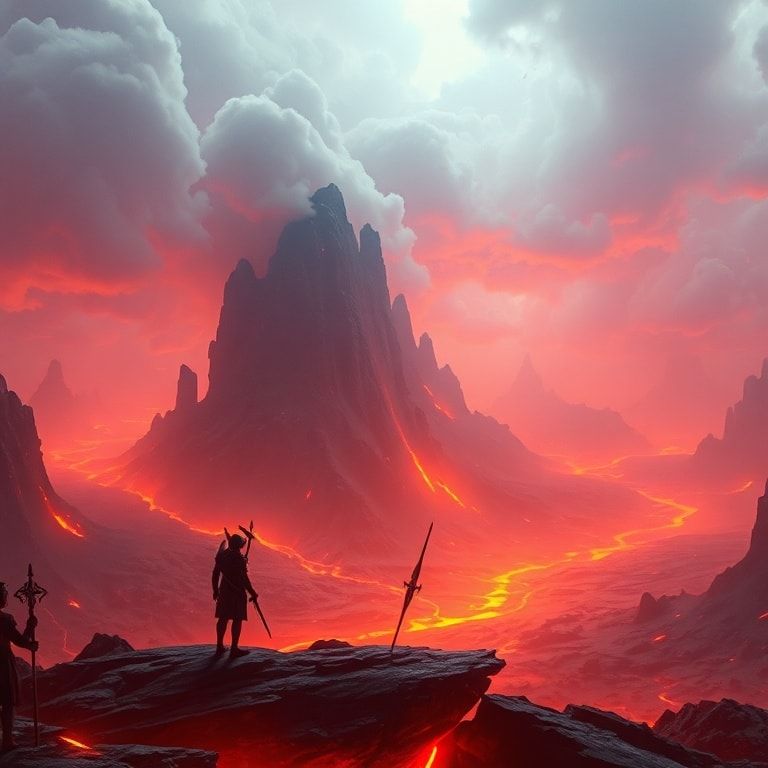
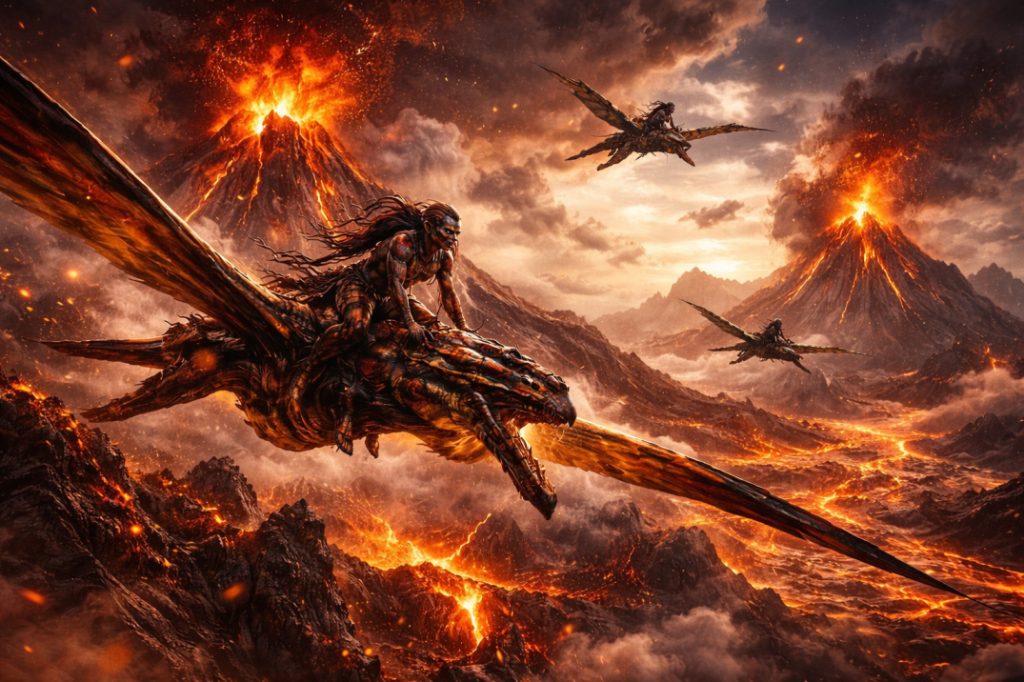
Pandora’s volcanic regions are stunningly realized. Rivers of lava, ash-filled skies, scorched forests, and fire-adapted wildlife create an ecosystem that feels dangerous yet mesmerizing. Not for a moment does one feel that this is all artificial; even the daylight shots depict the harsh lights of the sun as it would on a hot summer day. Since human characters freely intermingle with CGI ones, the brilliance of the artificial images is highlighted even more, in contrast. Extremely well done!
Cameron’s attention to ecological logic once again elevates the film. Every creature, habitat, and ritual feels purposeful, reinforcing Pandora as a living, breathing planet rather than a CGI backdrop. Throughout the movie, as we traverse the diverse landscape brimming with multiple varieties of flora and fauna, we are hauntingly reminded of what planet Earth once was and what we have reduced it to currently. If you are a nature lover, even knowing that the world depicted is unreal, you still wistfully look at it, wishing that such alternatives were possibly available to us!
Visual Effects & Cinematography: Industry-Defining Once Again
If there’s one certainty, it’s that James Cameron has once again redefined cinematic visual standards. The blend of practical effects, performance capture, and next-generation CGI is seamless.
Fire-based visuals—often difficult to render convincingly—are handled with astonishing realism. The contrast between glowing lava and ash-darkened skies creates some of the most striking imagery in modern science fiction. All of it looks extremely seamless and very real.
This is not just eye candy; the visuals actively enhance the story’s emotional weight. The CGI characters display as much visual emotion as their human counterparts, and every twitch of facial muscle looks realistic. The monumental effort required to bring all this to life is unimaginable, and it cannot only be the Director’s mission and vision, but the CGI team also deserves an equal amount of kudos.
Performances: Strong, Subtle, and Purposeful
The cast delivers grounded performances that anchor the film’s scale. Emotional restraint replaces melodrama, particularly in moments of grief, moral conflict, and internal struggle.
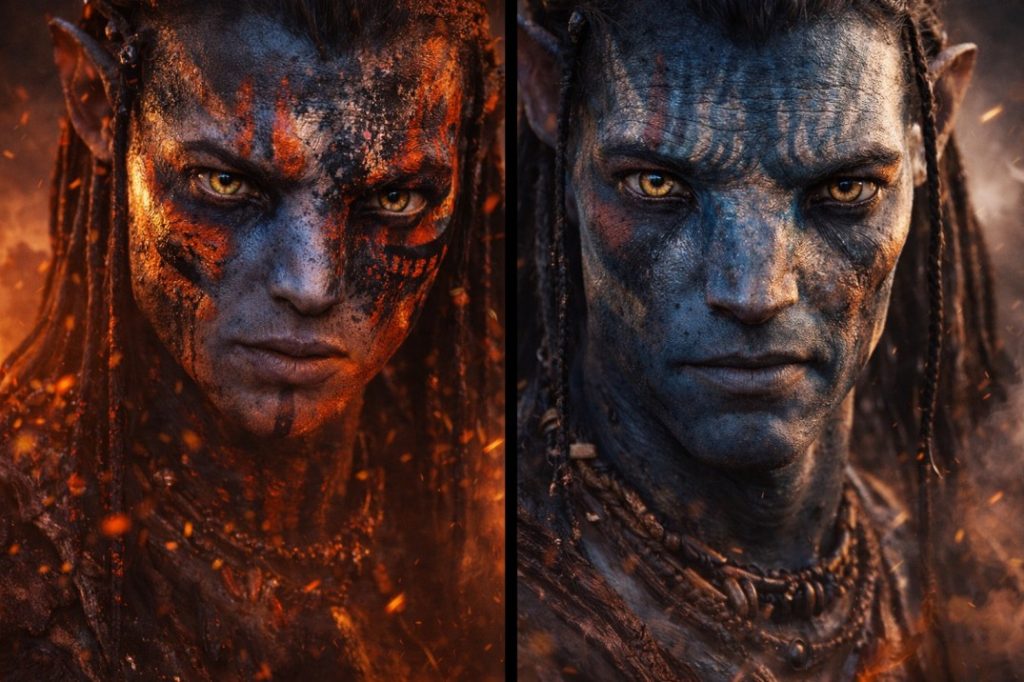
The new Na’vi characters associated with the fire clans stand out, bringing menace, charisma, and philosophical depth. Their presence adds tension not just through action, but also through their appearance, the red color tempered by the grey of ash, which symbolizes their ideology.
Music & Sound Design: A Darker Sonic Identity
The score adopts heavier, more percussive tones compared to earlier films. Fire, ash, and conflict dominate the soundscape, creating a sense of looming danger throughout.
The sound design—especially during volcanic sequences—is immersive and visceral, making Fire and Ash a reference-quality theatrical experience. Watching it in IMAX elevates both the visual and aural experience, immersing the audience both with the stunning display and the near-you audio. It feels like you are right there in the middle of it and everything is happening right around you.
Themes That Resonate Beyond the Screen
What truly elevates Avatar: Fire and Ash is its relevance. The film explores:
- The dangers of radicalization
- The cycle of violence
- Environmental collapse driven by human ambition
- Cultural purity versus coexistence
These themes resonate strongly in today’s geopolitical and environmental climate, making the film both entertaining and thought-provoking. In relevance to the endless corporate and political greed on display, thoughtless mining, whaling, and relentless pursuit of power, money, and its associated corruption.
Why This Film Will Dominate Movie-Watching Trends
Avid interest in Avatar Fire and Ash movie review, Avatar Fire and Ash plot, Avatar Fire and Ash visuals, and Avatar Fire and Ash release analysis is already surging due to:
- The allure of the continuing series
- James Cameron’s global fanbase
- The Avatar franchise’s proven box-office dominance
- Cutting-edge visual technology
- Expanding cinematic universe appeal
- What twist will the story take next
Final Verdict: Is Avatar: Fire and Ash Worth Watching?
Absolutely. Avatar: Fire and Ash is not just another sequel—it’s a reinvention. It deepens the Avatar mythology while embracing darker, more complex storytelling. The film proves that blockbuster cinema can still be intelligent, emotionally resonant, and visually revolutionary.
The only gripe that I have with this movie is that the story, when pared down to its essential bones, is pretty ordinary. A revenge movie that moves on expected lines and brings cliched scenes to reiterate that tired plot line. That is not to say there are no nuances or no novelty to anything. There are, and those are quite nice, elevating the movie somewhat, but that’s not what the cinema-going audience expects from a director of the stature of James Cameron!
We wanted/expected a visual spectacle along with an equally captivating storyline. Alas, what we got was the visual spectacle part, but the storyline remained a bit ordinary and tired from being rehashed about a million times. So, this holiday season, set aside about four hours and watch Avatar: Fire and Ash at an IMAX near you. This has to be BIG screen, BIG sound, and BIG expectations!!
⭐ Rating: 4 / 5
A visually breathtaking, emotionally intense chapter that confirms James Cameron’s unmatched command over epic filmmaking. The scale, the vision, imagery, and finally the execution are at an epic level, and one can hardly wait till 2029 for the next sequel and how different that can be from this one. But till that time, grab your popcorn, tilt your seat back, and unabashedly enjoy the spectacle!!