Is Hitler’s First Murder Cover-Up Story Worth the Hype? (Plot Summary & Review)
Table of Contents
My Rating: 4 out of 5
Before I dive into the story and review of The Munich Affair, it would be enlightening to look into the backstory of the rise and fall of Adolf Hitler, one of the worst dictators in human history. He presided over one of the most horrific genocides ever witnessed by mankind, in which more than 6 million European Jews were killed in the name of Aryan purification. This story starts in 1931, long before Hitler became the autocratic, mass murdering filth that he was. Parts of the story are true, and parts of it are fictionalized.
Adolf Hitler didn’t just wake up as the Führer. His rise started in the grimy, post-WWI streets of Munich. Frustrated by Germany’s defeat, Hitler joined a tiny, radical group called the German Workers’ Party in 1919. He quickly realized his voice was a weapon. He rebranded the German Workers’ Party as the Nazi Party, weaponizing public anger, economic ruin, and intense nationalism. By 1923, Hitler decided he was ready to seize power. His attempted coup, the Beer Hall Putsch, failed miserably. It landed him in Landsberg Prison, but he used that time to write Mein Kampf and map out his ultimate blueprint. As he rose to prominence, controversies and rumors surrounded his personal life and political methods.
Plot Summary of The Munich Affair
A significant scandal involved the death of his half-niece, Geli Raubal, who died from a gunshot wound in his Munich apartment in 1931. While officially ruled a suicide, the event generated intense media speculation and rumors regarding the nature of their relationship and the circumstances of her death. Additionally, political opponents frequently circulated rumors regarding his personal life and sexuality during his early years in Vienna and Germany.
As the Nazi Party gained control, alternative political narratives were suppressed, and internal rivals—such as leadership figures within the Sturmabteilung (SA)—were later systematically eliminated during the Night of the Long Knives to consolidate absolute authority. But long before that, Hitler committed his first murder and buried the crime under a mountain of deception and falsehoods. Aided by Martin Bormann and Rudolf Hess and the rest of his inner circle, Hitler covered up the murder of his niece, Angela “Geli” Raubal, the daughter of Hitler’s half-sister, Angela.
This was at a time when the entire German administration wasn’t corrupted by Hitler’s dogma, so the Munich police did start an investigation into the alleged suicide/homicide. Detective Thomas Bauer, a fictional character in this novel, is assigned the case. He is a conscientious, principled police officer who, along with rookie Peter Helldorff, starts looking at the case. Hitler’s reputation as an unruly rabble-rouser had already started to spread, so it wasn’t difficult to start suspecting the narrative that was being put forward by his core team around Geli’s death.
But his investigation on the first day itself identifies quite a few inconsistencies in the story presented by Hitler. As he digs deeper, there are more questions than answers, and then he finds himself taken off the investigation. His boss, the Munich Criminal Police chief, is a corrupt man and has already sold his soul to Hitler and his nascent party. But Thomas Bauer is not a man to give up so easily, particularly when he feels that the victim of a crime has been denied justice because the perpetrator is a powerful man. So he continues his investigation into the crime on his own time.
It is pertinent to mention here that the fiction around the true incident is also rooted in modern times, where American historian and author Eleanor Robbins is drawn into this 90-year-old saga by Thomas Bauer’s descendants. Eleanor travels to Munich to see what could be unravelled after so many decades, more out of curiosity than the urge to finally solve the crime. But, surprisingly, it seems that the case still has shady people interested in it, and they will go to any lengths to let sleeping dogs lie. There’s still a group of people who are unwilling to be identified but are watching Eleanor and the results of her nosing around.
Going back to Thomas Bauer, who increasingly finds himself cornered and watched in his side investigation. He finds a resourceful and willing ally in Fritz Gerlich, a journalist who recognizes the threat that Hitler poses and is publicly taking him on. You have to remember, this is the early 1930’s, when Hitler is strengthening his base, whipping up anti-semitic sentiments, and is on the cusp of becoming the terrible monster the world came to know him as. Bauer is himself married to a Jewish woman, daughter of a rich and prosperous merchant, and has two children.
As the world around him descends into chaos and the hell unleashed by Hitler and his murderous pals, he obsessively pursues his mission of finding justice for Geli. Is there some proof that makes Hitler complicit in the crime? He thinks so, and 90 years later, Eleanor Robbins does too. But as Bauer and his remaining friends get submerged in the underground anti-Nazi resistance movement, it is more about vendetta and justice for the sake of humanity than about Hitler’s first murder case. The Munich Affair blends facts with fiction, and that’s what makes it such a great read.
I will leave you here, wanting to know more about what happens, so pick up The Munich Affair and find out if the ghost of Thomas Bauer and Eleanor Robbins can bring justice to Geli Reubal and lift the veil off Hitler’s first murder.
Final Thoughts: Is The Munich Affair Worth Your Time?
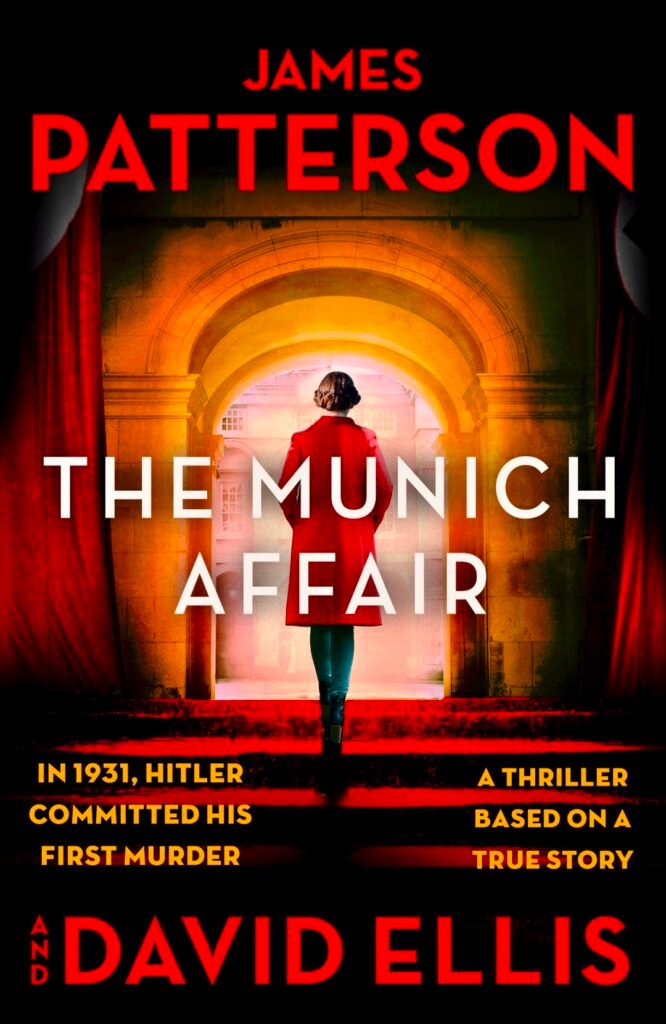
When you step back and look at what James Patterson and David Ellis have built in The Munich Affair, it is clear that this isn’t just another standard, fast-paced thriller to power through on a rainy weekend. It is a story that lingers long after you turn the final page, leaving you to ponder the quiet, everyday choices that shape history.
What makes this book so uniquely compelling is how it balances two very different storytelling engines. On one hand, you have the unmistakable, propulsive rhythm of a classic thriller. The short chapters, high stakes, and constant tension keep you hooked, driving you forward through a web of institutional cover-ups and political corruption. But on the other hand, there is a deep, emotional weight anchored in real-world history. The authors dive into the dark shadow of Munich in 1931—specifically the tragedy surrounding Geli Raubal and Hitler’s rise to power—and treat the setting with genuine gravitas.
The heart of the story lies with its courageous main characters: Detective Thomas Bauer, who refuses to let the truth be swept under the rug despite immense danger to his family; journalist Fritz Gerlich, risking everything to speak truth to power; and modern-day researcher Eleanor Robbins, who bridges the past and present to uncover what was buried. Watching honest people attempt to simply do their jobs in an environment built on fear is where the novel hits hardest.
While pure history buffs might find certain plot points dramatized for narrative suspense, The Munich Affair achieves something essential: it makes history feel visceral, personal, and alarmingly relevant. It asks a haunting question that stays with you: How many ordinary people, turning a blind eye, does it take for evil to triumph?
If you are looking for a suspenseful, multi-layered historical thriller that delivers non-stop entertainment while making you think, The Munich Affair deserves a top spot on your reading list.
Frequently Asked Questions (FAQ)
What is The Munich Affair by James Patterson and David Ellis about?
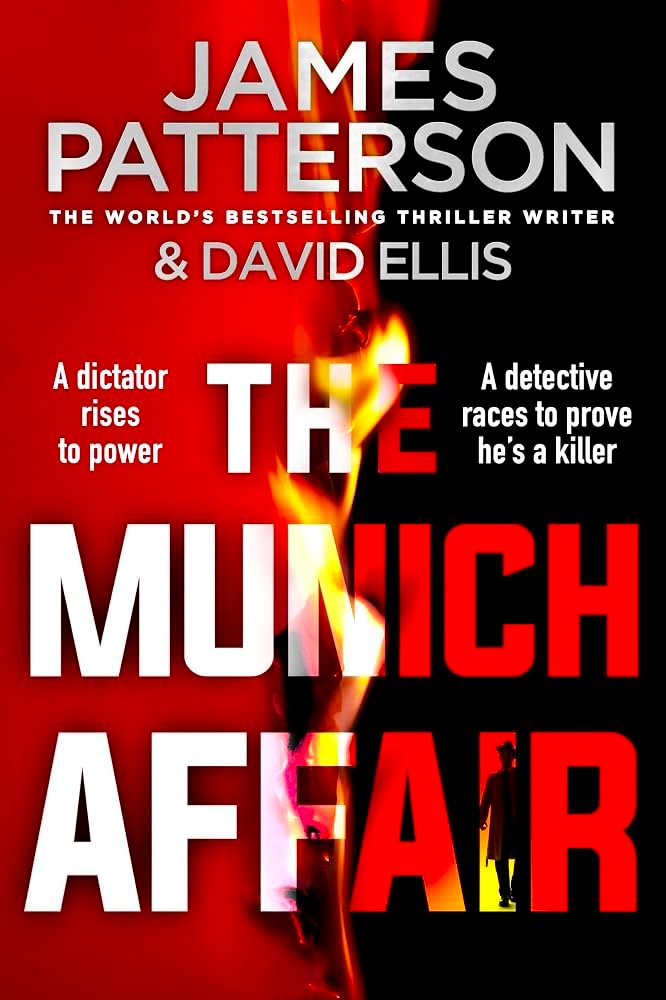
The Munich Affair is a historical suspense thriller set against the backdrop of 1931 Munich and the modern day. It revolves around the mysterious death of Adolf Hitler’s niece, Geli Raubal, in his apartment. The story follows a dedicated detective, an unyielding journalist, and a present-day academic as they fight to expose the truth behind the cover-up.
Is The Munich Affair based on a true story?
Yes, the novel is inspired by real historical events. Geli Raubal was indeed Hitler’s half-niece who died of a gunshot wound in his Munich apartment in September 1931 under suspicious circumstances. Key figures like journalist Fritz Gerlich were real people who tried to investigate the incident, though the authors weave fictional elements and dramatic plot lines around these documented facts.
Is this book suitable for book club discussions?
Absolutely! The Munich Affair offers rich themes for discussion, including moral courage vs. self-preservation, political corruption, the role of press freedom, and how ordinary citizens react when democratic institutions begin to fail.
Who would enjoy reading The Munich Affair?
This book is perfect for fans of historical thrillers, World War II-era fiction, mystery investigations, and page-turners from authors like Steve Berry, Brad Meltzer, or Kristin Hannah.